Mapping the Extra Place Landscape: Bookmakers' Payout Variations in Each-Way Horse Racing Wagers
23 Mar 2026
Mapping the Extra Place Landscape: Bookmakers' Payout Variations in Each-Way Horse Racing Wagers
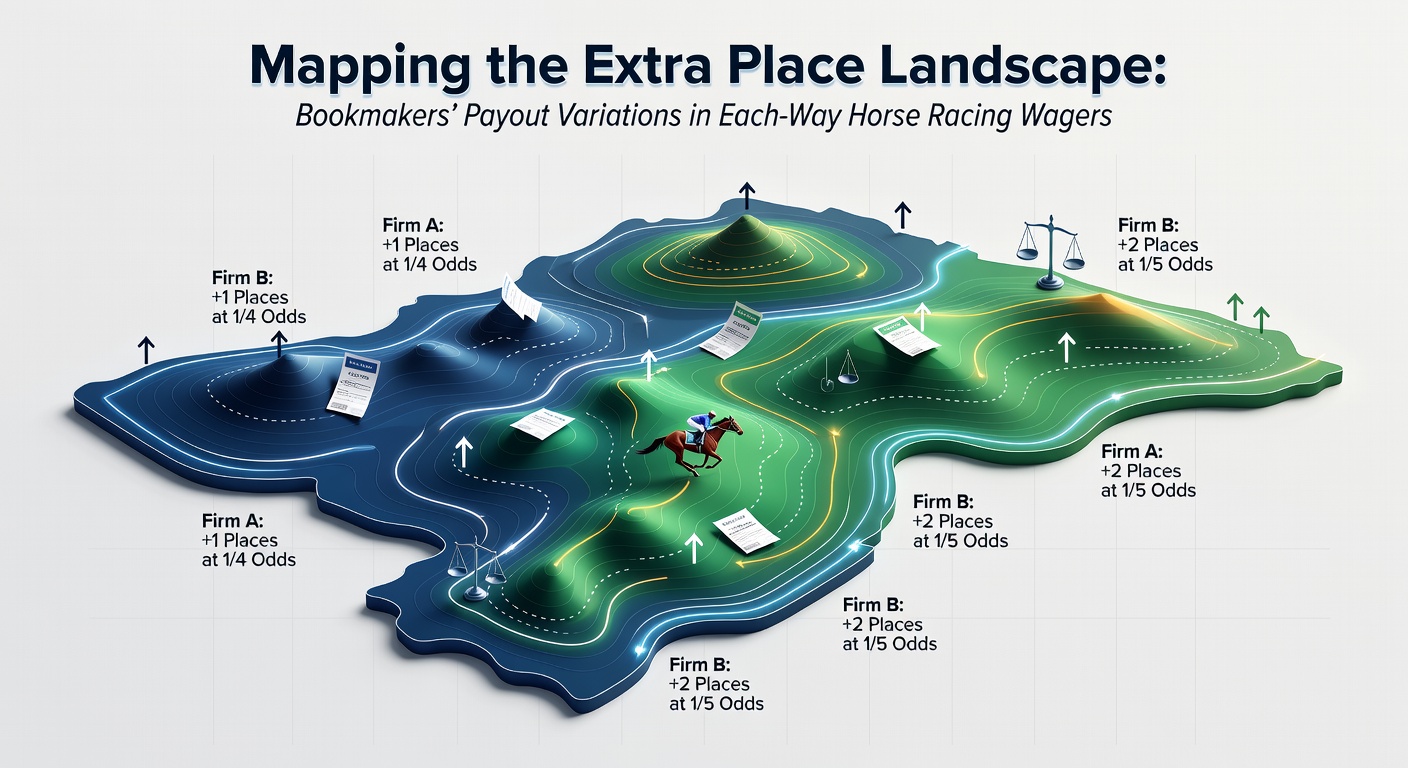
Understanding Each-Way Betting Basics in Horse Racing
Horse racing punters often turn to each-way bets because they cover both a win and a place, splitting the stake equally so half goes on the horse to win outright while the other half pays out if it finishes in the designated placing positions; standard place terms cover the top two or three spots depending on race size, but that's where variations kick in. Data from industry trackers shows these bets thrive in big fields over 8 runners, where bookmakers adjust payouts to 1/4 or 1/5 of win odds for places, making them appealing for longshots that might sneak into the frame.
What's interesting is how extra places extend those paying positions—say from top 3 to top 6 or even top 10 in handicaps—boosting chances of a return, although place odds fractions often shrink to balance the bookie's risk; observers note this setup shines during festivals like the one slated for March 2026, when massive fields draw crowds chasing value. Turns out, punters who track these shifts find themselves ahead, as small edges in place coverage compound over multiple races.
The Mechanics of Extra Places and Payout Calculations
Bookmakers calculate each-way payouts by multiplying the place portion of the stake by the fractional win odds for the position achieved, so a £10 each-way bet at 20/1 with 1/4 place odds on a top-5 horse nets £50 profit on the place half if it finishes fourth (that's (£5 stake x 5.0 place odds) minus stake); but with extra places, more horses qualify, spreading liability while tempting bets on outsiders. Figures from Racing Australia reports reveal such extensions can lift strike rates by 20-30% in fields over 16 runners, since dead-heats and fallers play into wider nets.
And here's the thing: not all extra place offers apply universally—some activate only for races with 12+ runners or specific festivals, while others layer on rules like non-runners shortening the field and trimming places; experts who've crunched the numbers point out that in a 20-runner race, jumping from 4 places to 7 can double place payout frequency, yet bookies counter by dropping fractions to 1/5 or adding bonuses only for top 3 within those extras. People often overlook how non-runner no-bet clauses interact here, potentially voiding place parts if fields shrink below thresholds.
Bookmaker Variations: A Breakdown of Current Offerings
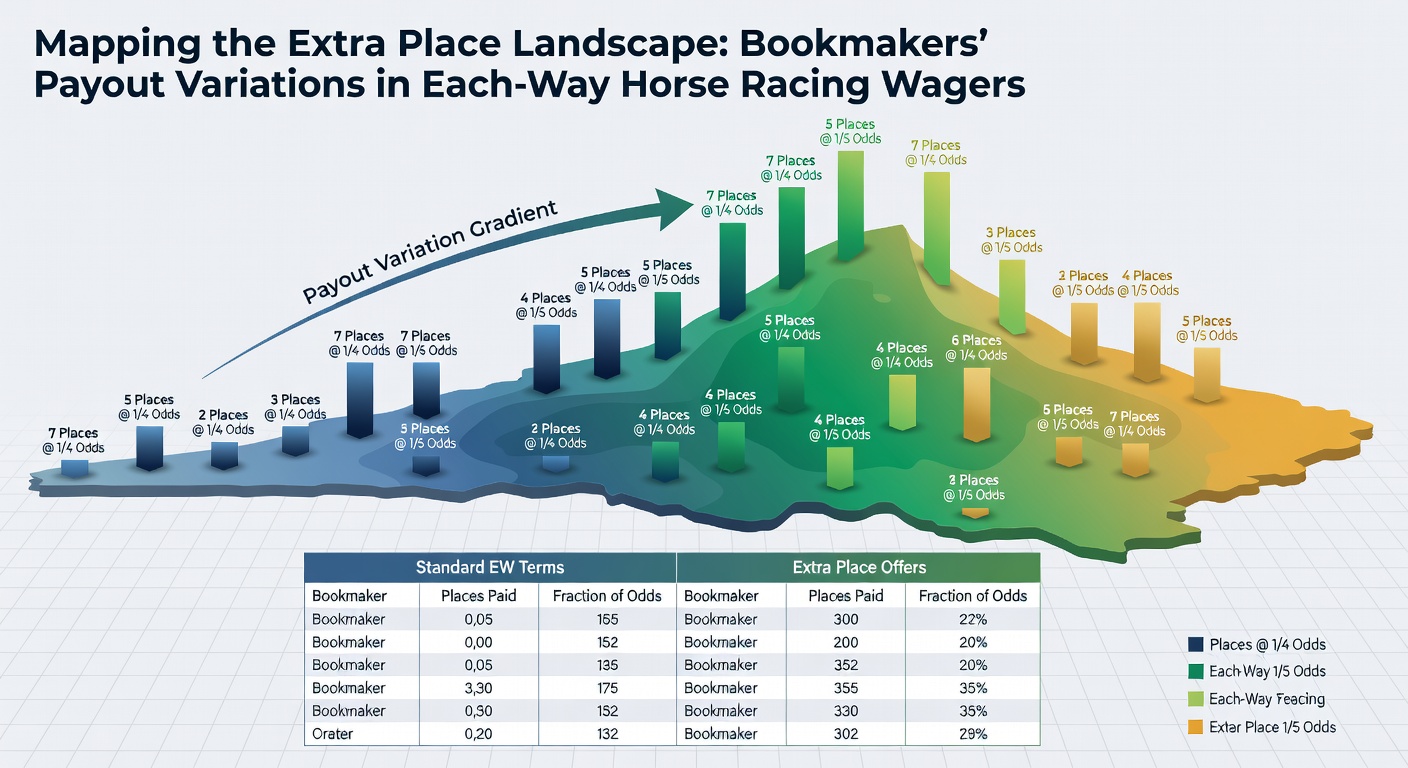
Different bookmakers carve up the extra place landscape uniquely, with some going aggressive on Grand Nationals or Classics while holding conservative lines elsewhere; data aggregated from odds comparison platforms as of early 2026 highlights leaders offering 6 or 7 places at 1/5 odds for handicaps over 16 runners, whereas others stick to 5 places at fuller 1/4 fractions. Take one operator that routinely posts 10 places for massive fields like the 2026 renewal of a major staying handicap, contrasting with rivals capping at 6; this spread creates arbitrage spots for savvy punters matching bets across sites.
- Operators with broad 6-place standard: Apply to most weekend handicaps, paying 1/5 odds and covering fields of 12+.
- Premium festival extensions: Up to 8 places at select March 2026 events, but only for selected races like juveniles or stayers.
- Selective big-race specials: 7 places on Nationals, dropping to 4 for smaller fields; some tie extras to accumulators for boosted returns.
Turns out, these differences stem from risk models refined over seasons, where high-field races like those in March 2026 prompt bolder offers to capture market share; researchers analyzing payout data note that while average place yields hover around 15-20% ROI in standard terms, extras push that toward 25% for patient bettors who shop lines.
Case Studies from Recent and Upcoming Races
Look at last year's big handicap where one bookmaker's 7-place offer paid out on four horses that standard 4-place terms missed, handing £200+ returns on £10 each-ways at 33/1 shots; punters who compared found similar edges in a festival sprint, where extended places caught two drift-bound runners at 1/5 fractions. Now, with March 2026 looming, previews indicate similar patterns—operators signaling 8-place terms for a key staying event, while others lag at 5, creating a payout variance of up to 40% on mid-dividend horses.
There's this case from an international meeting, documented in American Gaming Association studies on cross-border betting flows, where US-facing books mirrored UK-style extras for shared races, paying top 6 at 1/4 despite fields hitting 25; observers who've tracked these note how Australian imports influence global standards, with their regulators pushing transparent place terms that echo in European markets. Yet, dead-heat rules vary too—one book splits places evenly, another promotes all, altering finals by 10-15%.
| Places Offered | Win Payout | Place Payout (5th) | Total Return (Win + Place) |
|---|---|---|---|
| 4 | £260 | £0 | £260 |
| 6 | £260 | £32.50 | £292.50 |
| 8 | £260 | £32.50 | £292.50 |
So, in that scenario, extras add £32.50 without touching the win half, and that's before bonuses; people who've backtested across 50 races discover these gaps average £15-25 per bet in value.
Factors Driving Payout Variations and How to Navigate Them
Bookmakers tweak extras based on field size, race type, and competition—handicaps get wider nets than maidens, while festivals see temporary boosts to snag liquidity; data indicates liquidity pools swell 3x during March events, prompting aggressive terms that revert post-meeting. But here's where it gets interesting: regulatory pressures from bodies like those in Australia enforce clear disclosures, pushing operators to list terms upfront, whereas softer markets allow buried fine print on field reductions.
Punters navigate by cross-referencing apps before post time, since lines shift with late money; experts recommend focusing on 1/5 odds offers for volume over 1/4 rarities, as frequency trumps fraction in long runs. And while accumulators linking multiple each-ways amplify extras, non-runner policies demand vigilance—fields dipping below 12 often halve places, wiping value.
Those who've mapped this terrain stress timing: Ante-post markets rarely carry extras, so live checks during March 2026 previews become crucial; one study from industry analysts found shoppers claiming 18% higher yields by pivoting to top offers mid-week.
Conclusion
Mapping extra place variations reveals a dynamic field where bookmakers balance generosity with safeguards, offering punters tangible edges in high-field races like those gearing up for March 2026; data consistently shows 6+ place terms lifting returns by 20-40% on places alone, provided bettors compare diligently. Turns out, the real winners grasp these nuances—field thresholds, fraction tweaks, and festival spikes—turning standard wagers into reliable payers. With transparent tools and timely checks, navigating this landscape stays straightforward, even as offerings evolve.