1 Jul 2026
Charting Niche Esports Markets: How UK Platforms Align Real-Time Data Tools with Tiered Player Incentives
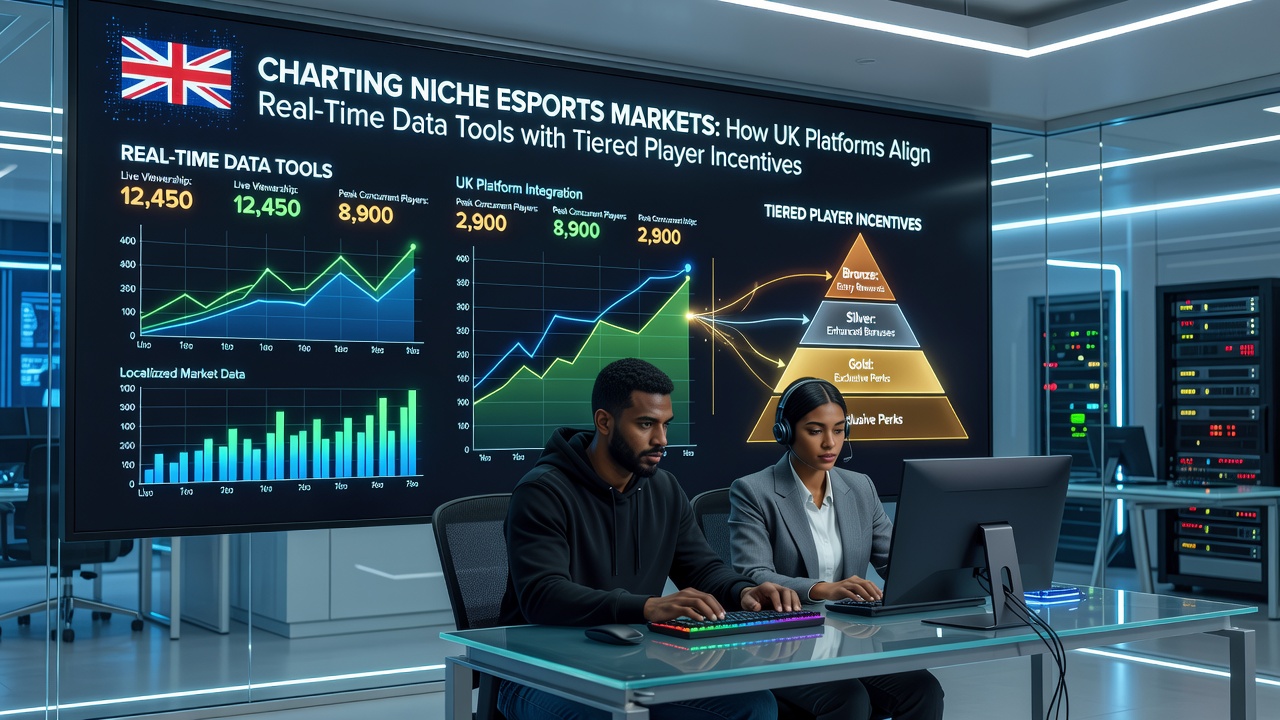
UK platforms have expanded their presence in niche esports markets over recent years, with operators integrating real-time data tools to track player performance across lesser-known titles such as Auto Chess, Fighting Games, and mobile battle royales. These systems draw from application programming interfaces that deliver live statistics on match outcomes, individual player metrics, and market movements, allowing platforms to adjust odds and promotional structures without delay. Data from industry reports indicate that niche esports betting volumes grew steadily through 2025, with UK operators capturing a notable share by focusing on titles outside the dominant League of Legends and Counter-Strike ecosystems.
Real-Time Data Integration in Niche Markets
Operators rely on proprietary dashboards that pull feeds from game servers and third-party analytics providers, updating odds within seconds of in-game events such as item purchases or map changes. This approach differs from mainstream sports betting because niche titles often feature smaller player pools and more volatile match data, requiring algorithms that account for regional server latency and community-driven patches. Platforms in the UK have adopted machine learning models trained on historical tournament data to predict shifts in betting interest, particularly during mid-week qualifiers that attract dedicated but smaller audiences.
By July 2026 several operators reported deploying enhanced monitoring suites that combine live viewership numbers from streaming platforms with betting activity, creating a feedback loop that refines incentive offers. These tools enable segmentation of users based on engagement depth, distinguishing casual viewers who place occasional wagers from those who follow multiple niche scenes simultaneously. The result appears in targeted promotions that activate only when specific data thresholds are met, such as a sudden spike in matches for a particular mobile title.
Tiered Player Incentives and Structural Design
Tiered incentive programs organize rewards into progressive levels tied directly to verifiable activity metrics. Participants advance through bronze, silver, gold, and platinum categories based on cumulative wager volume, frequency of participation in niche esports events, and retention across consecutive promotional periods. Each tier unlocks distinct benefit structures, including enhanced payout multipliers on selected markets, access to exclusive data visualizations, and priority entry into prediction contests linked to upcoming tournaments.
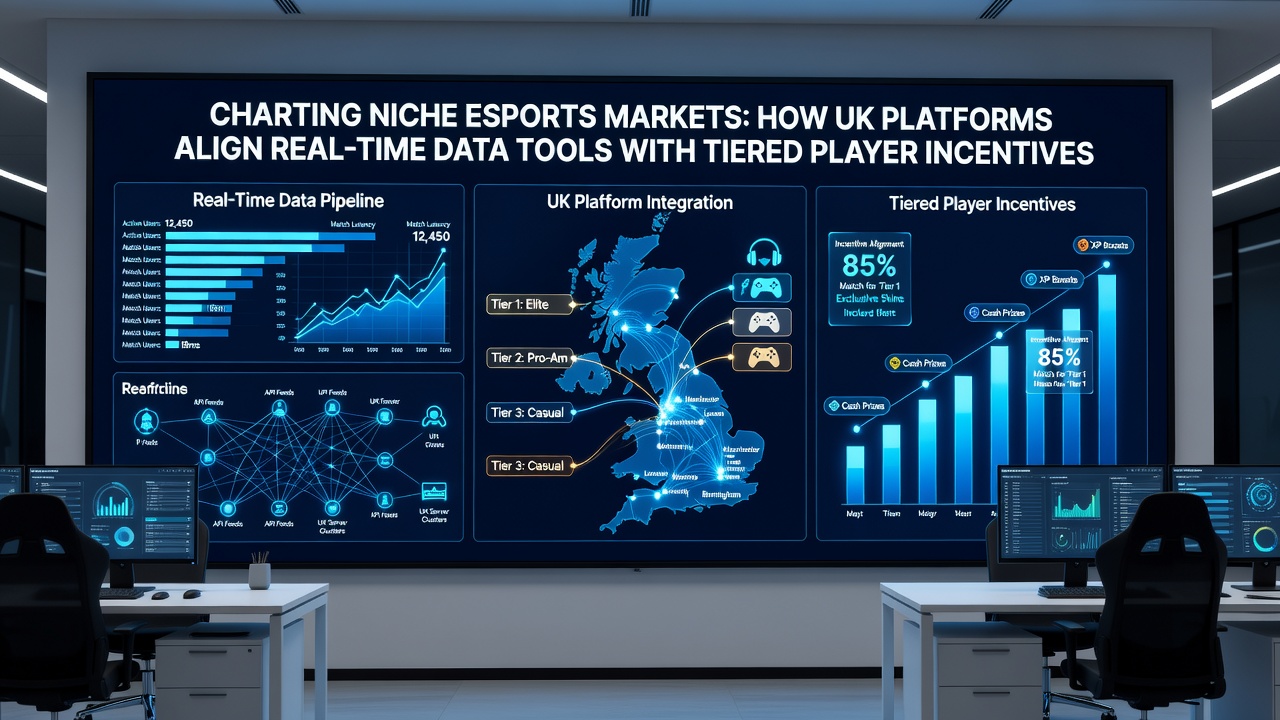
Platforms calibrate these tiers using the same real-time data pipelines that inform odds, ensuring that reward triggers align with actual market conditions rather than static calendars. For instance, when live data shows elevated interest in a niche fighting game tournament, silver-tier users may receive temporary access to boosted markets while gold-tier users gain additional free-to-play prediction entries. This synchronization reduces the lag between data signals and user rewards, maintaining engagement during periods of lower mainstream activity.
Alignment Mechanisms Across UK Operators
Alignment occurs through centralized customer relationship management systems that merge live market data with individual account histories. When a user reaches a new tier threshold, the platform automatically evaluates current esports fixtures and assigns incentives that correspond to active betting lines. This method avoids generic promotions by generating offers based on observed patterns, such as increased activity in a specific region during evening hours for Asian-developed mobile titles.
Operators have also introduced cross-tier challenges where groups of users at different levels compete collectively on niche esports outcomes, with rewards distributed proportionally according to tier status. Real-time leaderboards update continuously, drawing from the same data feeds that power odds calculations. According to figures published by the European Gaming and Betting Association, such integrated systems contributed to higher retention rates among users focused on emerging esports titles during the first half of 2026.
Examples from Platform Implementations
One operator introduced a tiered system for Auto Chess markets where platinum users receive detailed heatmaps of item economy trends pulled from ongoing matches, while lower tiers access simplified win-rate summaries. Another platform tied reload bonuses for mobile battle royale events to real-time performance indicators, releasing additional credits only when aggregate player activity exceeded predefined benchmarks. These implementations rely on transparent rule sets published within account dashboards, allowing users to track progression without external calculation.
Researchers at the University of Sydney's Digital Games Research Centre documented similar data-incentive pairings in international markets, noting that UK platforms adapted these models to comply with local advertising standards while maintaining competitive reward scaling. The study highlighted how alignment reduced instances of mismatched promotions that previously led to user drop-off during quiet tournament periods.
Conclusion
UK platforms continue refining the connection between real-time esports data tools and tiered incentives by embedding analytics directly into reward engines. This integration supports sustained activity across niche markets through July 2026 and beyond, with operators adjusting thresholds in response to evolving game patches and viewer patterns. teh approach relies on continuous data validation and clear tier criteria, ensuring that incentives remain responsive to actual market dynamics rather than predetermined schedules.